National Day of Truth and Reconciliation
September 30th is Orange Shirt Day
September 30 is Orange Shirt Day, a day to honour residential school Survivors and remember the children who never returned home. It is also an opportunity to reflect on the ongoing impacts of residential schools and the importance of truth and reconciliation.
The orange shirt and the message Every Child Matters come from the story of Phyllis Webstad, who shared how her new orange shirt was taken from her when she arrived at residential school. Her story has become a powerful reminder of the children, families and communities affected by the residential school system.
Learn more about Orange Shirt Day and Phyllis’s story through the Orange Shirt Society.
I just want people to know that this happened in my lifetime. It's not something that happened 100 years ago and it's all over. It's still current.
Phyllis Webstad, Founder of Orange Shirt Day
What can I do as an early childhood educator?
For early childhood educators, September 30 can be a time to pause, learn and consider how we create spaces where every child and family feels a sense of belonging. How we talk about residential schools and reconciliation will look different depending on the age of the children, the families in our programs and our connections to the community.
Some ways to recognize the day in your program include:
- Wear orange and talk about why. Invite educators, children and families to wear orange and introduce the message Every Child Matters in age and developmentally appropriate ways.
- Share stories. Choose books that support conversations about family, belonging, identity, community and residential schools.
- Learn from your community. Where appropriate, connect with an Elder, Knowledge Keeper, First Nations family or community member.
- Keep the learning going. Truth and reconciliation is not limited to one day. Consider what your program can learn, reflect on and incorporate throughout the year.
This day can bring about a lot of feelings for many people. Remember to be kind to yourself and those around you.
Books for young children
Ages 0-3
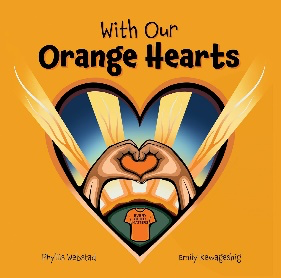
Ages 3-5
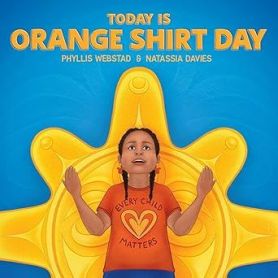
Ages 6-10
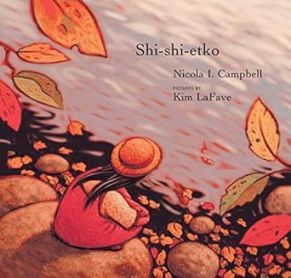
Ages 4-7
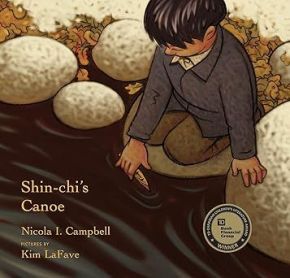
Ages 4-7
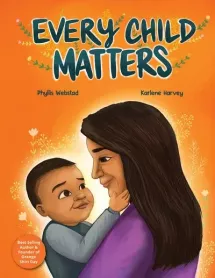
Ages 4-8
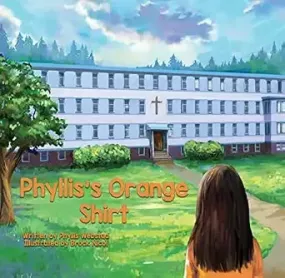
Consider these reflective questions from the B.C. Early Learning Framework (2019):
- How might I begin conversations with colleagues, families, and children about Canada’s history of colonialism? (p. 70)
- Educators have an important role to play in educating others about Canada’s history of colonialization. How can I contribute? (p. 89)
- What do I know about Canada’s colonial history and the systemic marginalization and forced assimilation of Indigenous peoples? How can I find out more? (p. 89)
- Indigenous social and cultural revitalization is underway in many communities. How can I contribute? How can I find out more? (p. 89)
- In what ways have I included and honoured knowledgeable community Elders in my program? (p. 89)
Additional resources for your program
The Every Child Matters poster is a printable resource featuring the “Every Child Matters” message in multiple languages.
Printed copies of the Every Child Matters poster are also available at the Early Learning and Child Care Branch office for programs that would like to pick one up. We are located at 1000 Lewes Blvd. Our office is open Monday to Friday between the hours of 8:30 a.m. to 4:30 p.m.
The Orange Shirt Society website provides information, activities and resources about Orange Shirt Day, the history behind the movement, and the work of the Orange Shirt Society.
Government of Canada information on National Day for Truth and Reconciliation provides information about September 30, the history and significance of the day, and resources for learning, reflection and commemoration.
The Truth and Reconciliation Commission of Canada’s Calls to Action outlines 94 Calls to Action addressing the legacy of residential schools and identifying actions to advance reconciliation across Canada.
The Legacy of Hope Foundation website provides educational resources about the history and legacy of residential schools, including the Where Are the Children? exhibition and resources for educators.
The ECE Cultural Competency Project - BC Aboriginal Child Care Society offers five video modules and a companion resource designed to support early childhood educators in developing cultural competency and learning about Indigenous histories, identities and experiences.
Video: The truth is hard. Reconciliation is harder (Senator Murray Sinclair)
If you are a Survivor and need emotional support, a national crisis line is available 24 hours a day, seven days a week through the Residential School Survivor Support Line at 1-866-925-4419.
Locally there is the Committee for Abuse in Residential Schools (CAIRS) outreach and counselling for residential school survivors at 867-667-2247.
Consult the listing for: supports for residential school Survivors and their families and communities.
The Hope for Wellness Helpline is a national service that offers free, confidential, culturally sensitive counselling and support available 24/7 to all Indigenous people in Canada by phone or online chat. Support is available in English and French, with Cree, Ojibway and Inuktitut available upon request.