September 2026 Newsletter
Documenting with purpose: a strength-based approach to practice
At the heart of early childhood education is a commitment to respectful, reflective, and responsive practice. As educators, we draw on occupational standards and ethical responsibilities to guide how we support children’s learning, development, and well-being.
A key part of this work is how we observe and document children’s experiences. Documentation is more than recording what children do; it is a way of understanding who they are as learners. Grounded in a strength-based perspective, we recognize children as capable, curious, and competent individuals, each developing along their own unique pathway.
Children do not grow in one predictable way or timeline. Their development is shaped by their relationships, cultures, languages, and lived experiences. By paying close attention to children’s interests, strengths, and emerging skills, we create learning environments that are meaningful, inclusive, and responsive.
"Your mission is to document and observe the world around you as if you've never seen it before."
Unknown
Documentation and ethical care
What is strength-based documentation?
Strength-based documentation focuses on:
- What children can do
- Their interests and motivations
- Their emerging skills and competencies
It is ongoing, reflective, and purposeful. It helps educators:
- Plan meaningful learning experiences
- Reflect on their practice
- Communicate with families in respectful and collaborative ways
Rather than comparing children to fixed expectations, documentation supports us in seeing and responding to each child as an individual.
Our role in supporting development
As early childhood educators, we play an important role in observing and understanding children’s development, but it is essential to be clear about the scope of our role.
We:
- Observe and document children’s learning over time
- Use clear, descriptive, and unbiased language
- Share observations with families in respectful ways
- Build strong partnerships based on trust and communication
We do not diagnose children’s developmental needs.
When questions or concerns arise, our role is to:
- Notice patterns in development
- Share observations sensitively with families
- Support families in connecting with qualified professionals (such as speech-language pathologists, occupational therapists, or pediatricians)
“Stand aside for a while and leave room for learning, observe carefully what children do, and then, if you have understood well, perhaps teaching will be different from before.”
Loris Malaguzzi, founder of Reggio Emilia approach to education
This collaborative approach ensures that children and families receive the appropriate and specialized support they need, while maintaining respectful and ethical practice.
Do you know?
Local resources: supporting children and families
When families have questions about a child’s development, well-being, or access to supports, the Yukon offers a variety of community resources. Sharing these resources can help families connect with the right support while maintaining a collaborative and strength-based approach.
Child Development Centre (CDC) provides developmental supports and therapies for children from birth to kindergarten age, including speech and language therapy, occupational therapy, physiotherapy, psychology, and developmental therapy. Families can contact the CDC directly with questions or concerns about their child's development.
Website: https://cdcyukon.ca/
Family Resource Unit (Government of Yukon) provides free support for Yukon families and caregivers with children under 19. Services include parenting support, family goal setting, home visits, activities for children, and connections to community resources.
Partners for Children supports Yukon families, caregivers, and early learning programs through parent education, workshops, support groups, the Healthy Beginnings Guide, and other early childhood resources.
Yukon First Nation Education Directorate (YFNED) – Early Years Program supports Indigenous families with children from birth to age five. Services include home visits, parent support, cultural programming, workshops, food programs, and community gatherings. The program recognizes parents as their children's first teachers.
Website: https://www.yfned.ca/earlyyears
Book Nook
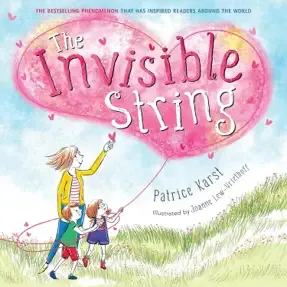
Children’s literature can be a powerful way to explore ideas about identity, strengths, emotions, and relationships. Picture books can support a strength-based approach by helping children see themselves as capable, valued individuals and encouraging empathy and connection with others. The Invisible String by Patrice Karst explores connection, relationships, and belonging, which are important for understanding children’s development. Consider inviting children to share what they are proud of, connect stories to real moments you have observed, and pair stories with documentation or discussions.
Explore
Be a strength detective
Purpose:
Strengthen observation skills and practice seeing children through a strength-based lens.
What you need:
- Sticky notes or a notebook
- A few minutes each day
How it works:
- Choose one child to observe during play.
- Watch without intervening for 5–10 minutes.
- Record only what you see and hear.
- Identify at least three strengths that are visible in the observation. For example, persistence, curiosity, problem-solving, kindness
Reflect together:
- What strengths became visible?
- How might these strengths inform future planning?
- Would another educator see the same strengths?
“When children pretend, they’re using their imaginations to move beyond the bounds of reality. A stick can be a magic wand. A sock can be a puppet. A small child can be a superhero.”
Fred Rogers, children’s television host
Grow
A documentation reflection
The BC Early Learning Framework (2019) emphasizes the use of learning stories as a meaningful method for observing, documenting, and reflecting on children's learning experiences.
Visit pages 90-99 of the Framework to read two examples:
- “The Educator I Once Was” describes an ongoing inquiry in which the educator engages with the vision and principles of the framework over many months.
- “Rapunzel’s Tower” describes how an educator collected traces of a moment and used them to engage with a living inquiry and pathways to inspire collaborative dialogue.