January / February 2026 Newsletter
Supporting professional relationships
Early childhood education is all about relationships. Every day, educators help children feel safe, welcomed, and valued through caring and responsive interactions. The relationships between educators are just as important. When colleagues support one another, it creates a positive workplace culture and supports educator well-being, professional growth, and the experiences of children and families.
In busy early learning settings, adult relationships can sometimes be overlooked. Staffing challenges, emotional demands, and full schedules can make it hard to slow down and connect with one another. However, when educators feel respected, supported, and connected to their colleagues, they are more confident, reflective, and better able to manage challenges.
Building supportive relationships at work takes intention. By showing empathy, being curious about others’ perspectives, and working together, educators strengthen their practice. Each person plays a role in shaping the culture of their program. When we listen to one another, show care and respect, and stay open to feedback, we can create positive change. Together, we can turn our teams into strong, supportive communities.
"Connection is the energy that exists between people when they feel seen, heard, and valued; when they can give and receive without judgement; and when they derive sustenance and strength from the relationship"
Brene Brown, The Gifts of Imperfection 10th Anniversary Edition
Relationships: The foundation of healthy teams
Supportive relationships among educators are built on trust, empathy, shared responsibility, and mutual respect. These relationships create environments where educators feel safe to ask questions, share ideas, admit challenges, and celebrate successes.
When educators experience strong peer support:
- Stress and burnout are reduced
- Confidence and job satisfaction increase
- Communication improves
- Consistency in practice is strengthened
- Children benefit from calmer, more responsive environments
Supportive teams recognize that everyone brings unique experiences, strengths, and perspectives. Rather than expecting uniformity, healthy teams value difference and approach challenges collaboratively.
"Alone we can do so little together we can do so much."
Helen Keller was an American author, educator and disability rights advocate
What support looks like in practice
Supportive relationships show up in small, everyday moments:
- Checking in with a colleague after a challenging interaction
- Offering to step in when someone needs a break
- Listening without judgment
- Acknowledging one another’s efforts and expertise
- Respectfully working through differences of opinion
These actions send a powerful message: you are not alone in this work.
Collaborative dialogue: learning together through conversation
Collaborative dialogue is one of the central practices of the British Columbia Early Learning Framework. It is more than casual conversation—it is intentional, reflective discussion that deepens understanding and strengthens practice. Through dialogue, educators explore questions, challenge assumptions, and co-construct knowledge.
Effective collaborative dialogue:
- Is grounded in respect and curiosity
- Focuses on shared goals for children and families
- Encourages multiple perspectives
- Makes space for reflection and uncertainty
When educators engage in collaborative dialogue, they move from working side-by-side to learning together. For more ideas, check out this guideline on communication and collaboration with colleagues.
Do you know?
Yukon Learn is seeking ECEs for their peer mentorship program
Yukon Learn is looking for child care and early learning professionals who are interested in taking part in a peer-to-peer mentorship program, either as mentors or as mentees. This program is designed to support professional growth, knowledge-sharing, and connection.

Being a peer mentor does not require a title or years of experience. Peer mentorship is about supporting one another through relationships built on trust, respect, and shared learning. Every educator can be a peer mentor by noticing others’ strengths, offering encouragement, and learning together
Whether you are looking to share your experience or hoping to learn from colleagues, this program offers a supportive space to build skills, confidence, and professional networks.
Find out more about this opportunity with Yukon Learn by visiting their website or calling 867-668-6280.
More information about peer mentorship in early learning and child care:
"A mentor is not someone who walks ahead of us and tells us how they did it.
A mentor is someone who walks alongside us to guide us on what
we can do."
Simon Sinek
Book Nook
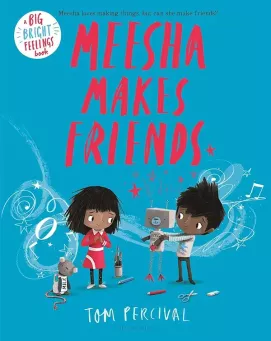
Picture books are powerful tools for teaching children about relationships, cooperation, and caring for one another. Through stories and illustrations, children see what it looks like to work together, solve problems, handle disagreements, and show kindness. Books help make these ideas concrete and meaningful, especially for young children who are still learning how to express their feelings and navigate social situations.
We might even learn something that will help us nurture our own relationship skills as we read! Here are some great choices to share with children:
If you want to go fast, go alone. If you want to go far, go together.
African proverb


Explore
Activity idea: Team building for educators
Purpose: Educators can take initiative to help build supportive relationship, share appreciation, and connect and celebrate with one another.
Strengths circle:
- Sit in a circle. One person volunteers to start.
- Team members take turns naming a strength they see in that person’s practice (for example, “You’re calm during transitions,” or “You really connect with families.”
- Move around the circle so everyone is affirmed.
Why it works: builds morale and helps educators feel seen and valued.
Scenario swap:
- In small groups, educators share a real (non-confidential) challenge.
- Other members of the group suggest strategies or ask reflective questions.
- Rotate scenarios.
Why it works: builds trust, shared learning, and collective problem-solving.
What helps you feel supported and connected at work?
Grow
The British Columbia Early Learning Framework (BCELF) reminds us that relationships are the context for wellbeing and learning. The BCELF encourages educators to practice pedagogical listening to help develop responsive, reciprocal, respectful relationships.
Pedagogical listening:
Listening or attending to the other person is not always comfortable. The words “attend,” and “tension” share a common root, tendere, which means “to stretch.” To really attend to another or to pay attention to another person, we must stretch ourselves; we must really strain to listen, to see, to feel – it is not a casual process.
(BC Early Learning Framework, 2019, page 48)
The framework is grounded in a pedagogy of listening. Is this a new idea? How might you explore it further?